 Photos:
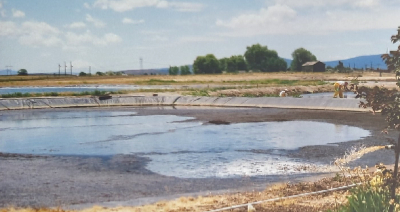
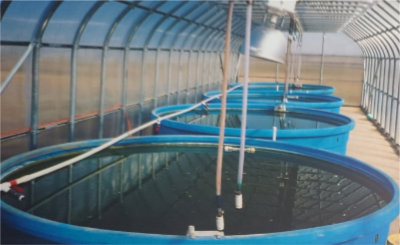
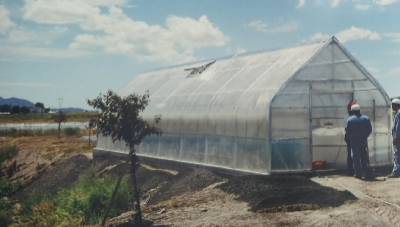
Lagoons set up with a system of onsite production tanks, housed in green houses, to grow oxygen producing algae culture.
These algae can use cow manure as a food source, producing oxygen as a byproduct of metabolism. The algae produce an alkaline pH in the metabolism process of digesting cow manure.
Anerobic bacteria that produce methane gas require an acidic environment for growth.
Anaerobic bacteria are inhibited from growing in an aerobic environment. They sporulate. Eventually, many of these spores are destroyed by oxygen and the alkaline pH produced by these algae cultures of oxyculture.
Insects such as flies and mosquitoes are inhibited from growing by the presence of oxygen and high pH produced by oxyculture algae.
 In these Kansas lagoons in July, at 3 pm in the afternoon, a study was done to measure the amount of oxygen produced by the oxyculture algaes in lagoon #3, at an ambient temperature of eighty degrees, the oxyculture in the #3 lagoon was measured with an oxiometer to be producing 4 liters of oxygen per liter of lagoon water. There are 3 1/2 liters of liquid per gallon of water.
We roughly measured the #3 lagoon to be approximetly 5,000 gallons of culture treated water, 175,000 liters of water producing 6,125,000 liters of oxygen per minute. The water temperature was 74F. The oxygen produced a haze over the lagoon. The oxygen probe was 8 inches under the lagoon surface.
Each molecule of oxygen produced from the treated lagoons combines with two molecules of hydrogen, from H2S produced by anarobes from other sources in the feed yard. Hoh is produced ( water) a neat way to produce microscoptic rain drops, which are carried by the wind, where the droplets combine to form large enough drops to fall back to the earth!
The S from the H2S is oxidised to form SO from the sulfide. So is a harmless oxide.
This same chemical action occurs in all of the treated lagoons where the pH is 6.8 or above; the higher the pH, the faster the production of oxygen. Some of the older lagoons have a pH in excess of 8.
The lagoons that are in an aerobic chemical balance produce oxygen in cold weather, just not as much. This is balanced out with the fact that cold water holds more oxygen than warm water. As the water warms, the oxygen in the water is released into the atmosphere.
|
|



 Welcome to